

 English
  中文简体
中文简体  Español
  Deutsch
A 4 slice sandwich maker toasts four filled sandwiches in a single pass, so it is the capacity class to choose when a two-slice machine cannot keep up with the table. It suits families of four or more, small cafés, breakfast-heavy holiday rentals, and anyone who would rather cook once than run two batches.
More precisely, a 4 slice sandwich maker is a hinged contact grill whose upper and lower plates each hold two sandwich bays. The plates close over four toasties at once and brown both sides together. Most models in this class are rated between 1,400 W and 2,000 W, measure roughly 29 cm to 34 cm across the plates, and finish a standard white-bread toastie in four to seven minutes, depending on the bread, the filling and whether the machine started cold.
What Actually Makes a Sandwich Maker a Four-Slice Machine?
The defining feature is not wattage or styling: it is two plates, each divided into two bays, joined by a hinge that closes flat and evenly. Controls, coatings and handles matter, but they follow the plate layout.
That layout has three practical consequences for anyone choosing a machine.
- Bay geometry decides the sandwich. Square bays of roughly 12 x 12 cm take standard sliced bread; triangular bays suit cut toasties. Compare the bay size with the bread sold where you live before ordering.
- The hinge carries the load. Four sandwiches weigh more and release more steam than two, so a floating hinge with a metal pivot keeps the plates parallel far longer than a plastic one.
- Heat recovery beats peak wattage. Cold bread and wet fillings drop plate temperature sharply; 1,800 W and above with a responsive thermostat browns evenly instead of leaving pale patches.
Fixed plates keep a machine light and inexpensive. Removable plates cost more, clean up far faster, and in some designs let you swap in a waffle or grill plate so one unit covers breakfast and lunch. A 15-minute timer and three-level heat control are common in this class, and they are genuinely useful when four sandwiches need slightly different browning.
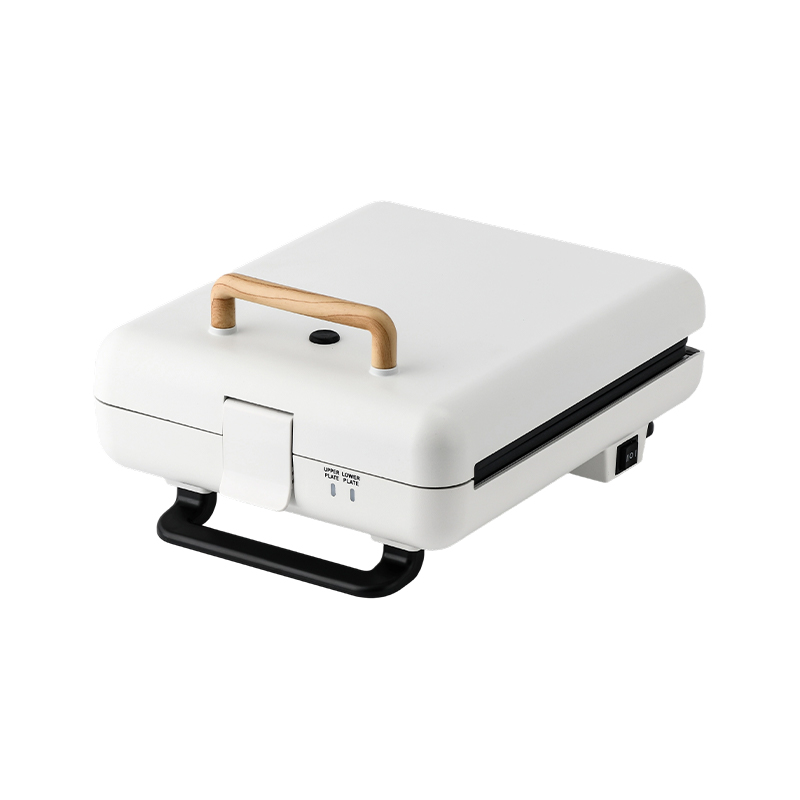
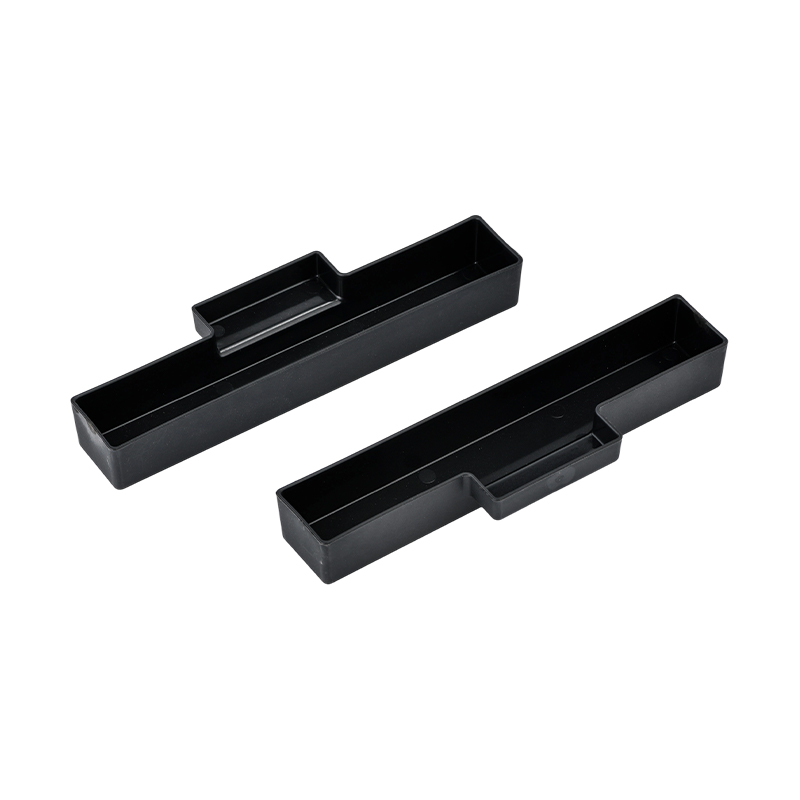 BJX-S026 4-Slice 180° Open Grill and Sandwich MakerFamily-sized 4-slice grill and sandwich maker with interchangeable plates, flat-opening design, 3-level control, and oil drip tray for versatile countertop cooking.View Product →
Four Slices, Two Slices or a Flat Panini Grill: Which Capacity Fits?
Extra capacity only pays for itself if you use it regularly; otherwise a four-slice machine costs more, weighs more and takes up more cupboard space than the job requires.
Capacity should be measured against how many people you feed at one sitting, not against the price tag. A two-slice machine suits singles, couples and small offices. A four-slice machine earns its place when four or more sandwiches are needed in one go, whether that is a family breakfast, a café counter or a rental kitchen where guests cook at the same time. A flat panini grill wins when sandwiches are only part of a mixed menu.
| Specification | Two-slice sandwich maker | Four-slice sandwich maker | Flat panini grill (28 x 28 cm class) |
|---|---|---|---|
| Sandwiches per cycle | 2 | 4 | 2 large panini or a full plate of vegetables |
| Typical power | 700–900 W | 1,400–2,000 W | 1,600–2,200 W |
| Plate format | Two small bays | Two plates, two bays each | One continuous 24 x 24 to 28 x 28 cm surface |
| Cycle time | 3–5 minutes | 4–7 minutes | 4–8 minutes, thickness dependent |
| Counter footprint | Narrow, easy to store upright | Wide, needs 35–40 cm depth | Widest, usually opens to 180 degrees |
| Best suited to | Singles, couples, small offices | Families, cafés, batch toasting | Mixed menus: panini, meat, vegetables |
A two-slice machine with a 180-degree opening and interchangeable plates covers toasties and open grilling in a much smaller footprint, which is often the better compromise in a two-person household. For a closer look at how cycle time and plate design affect daily use, this note on how a sandwich maker becomes a kitchen efficiency tool is a useful reference.
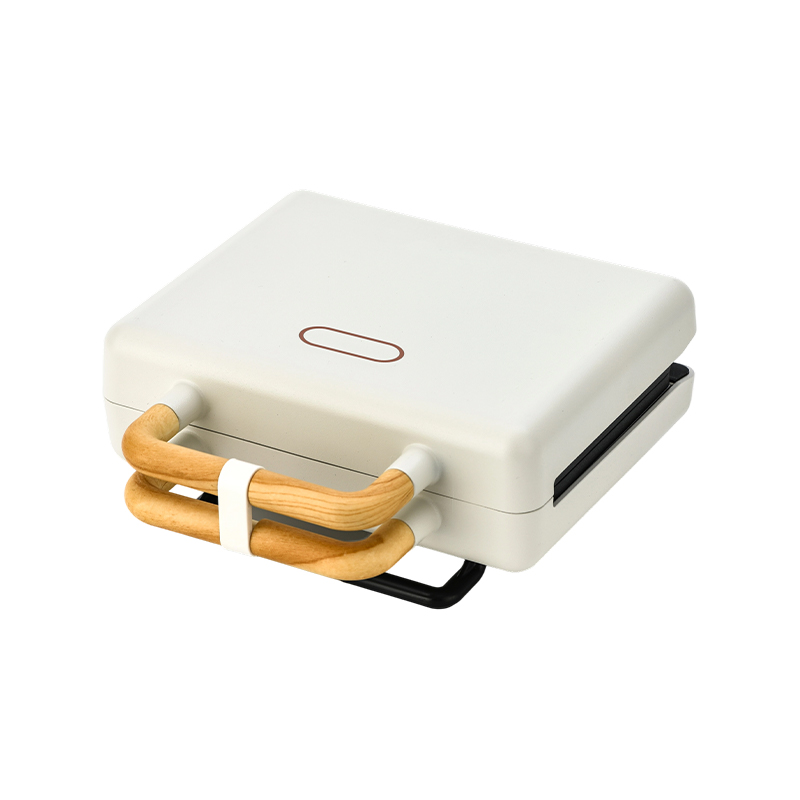
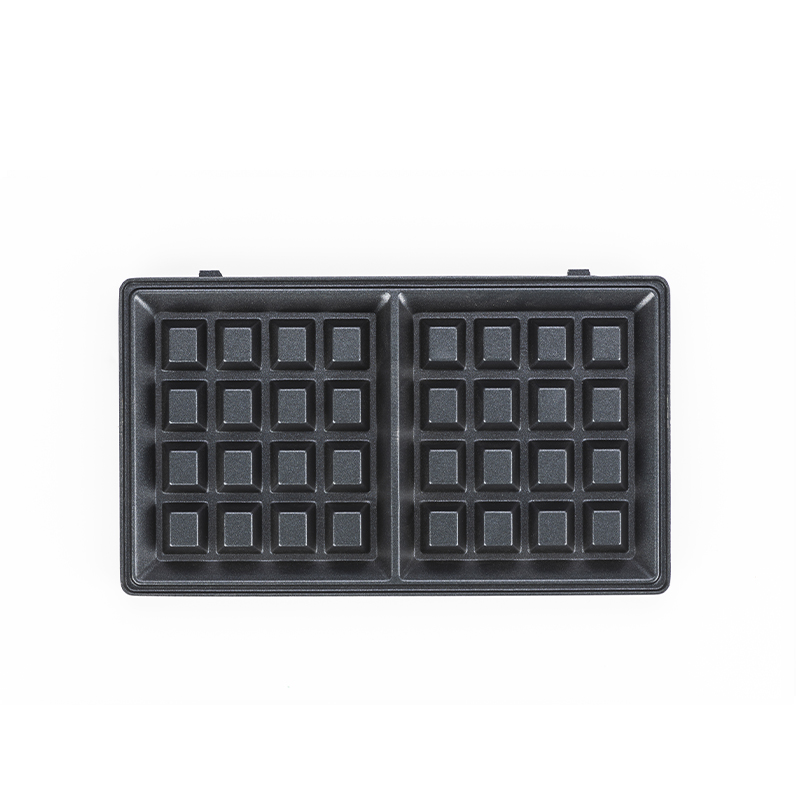 BJX-S025 2-Slice Detachable Sandwich and Grill MakerA compact two-slice maker with 180° opening and detachable plates for sandwiches, waffles, and grilling, suited to smaller households.View Product →
Which Specifications Decide Whether a Four-Slice Machine Lasts?
Hinge design, plate thickness and the type of control decide service life far more than the headline wattage printed on the box.
Power, Preheat and Recovery
Treat 1,400 W as the floor for four-slice cooking and 1,800 W as the comfortable working figure. Preheat takes three to five minutes, which on a busy morning matters more than the last 100 W of rated power. For back-to-back batches, look for a thermostat that cuts back in quickly rather than a simple on-off element.
Fixed or Removable Plates
Removable plates are the single biggest quality-of-life feature on any sandwich maker, because baked-on cheese is hard to remove from fixed plates without scratching the coating. Non-stick thickness also varies: thin coatings wear through in a year of daily use, while thicker ones survive several. With removable plates, confirm that spares exist and that the plates locate firmly with no wobble.
Timer and Heat Control
A mechanical 15-minute timer is a practical safety net when four sandwiches need different browning and nobody is standing at the counter. Three-level heat control does more for results than a single on setting, because thick and thin bread need different plate temperatures.
Hinge Travel, Footprint and Storage
A 180-degree opening turns the machine into a flat griddle for eggs, bacon or panini, which is worth having if counter space is tight. Otherwise measure twice: a four-slice unit typically needs 35 cm to 40 cm of counter depth and stands over 20 cm tall when closed, so check cord length and whether the cord wraps underneath for vertical storage.
What Do Four-Slice Buyers Complain About Most?
The recurring complaints about four-slice machines are uneven browning, filling escaping past the sealed edge, and plates that are awkward to clean.
- Uneven browning: usually a cold start or an overloaded plate rather than a faulty element. Preheat for five minutes and keep fillings shallow.
- Filling leaking at the edge: overfilled sandwiches push cheese into the hinge channel. Keep fillings about 1 cm from the crust and avoid very wet sauces.
- Sticking coating: sugar-rich fillings and metal tongs ruin non-stick surfaces. Use silicone or wooden tools and wipe the plates while they are still slightly warm.
- Hinge that loosens: a plastic pivot under a heavy four-slice lid is the usual culprit; metal pivots and a locking clip age far better.
- Overheated cables: long cycles on thin extension leads cause heat damage, so plug the machine directly into a wall socket.
Buying One Machine or Ordering in Bulk?
Households should buy on plate quality and warranty; distributors should buy on voltage options, plug standards, packing and lead time.
For a single purchase the priority list is short: removable plates, a metal hinge, at least 1,800 W, and a warranty you can actually claim. For a wholesale or private-label order the questions change. Voltage and plug configuration must match the destination market, with 120 V and a US-style plug for North America and 220–240 V with EU, UK or AU plugs elsewhere. Carton artwork, control-panel language, spare-plate availability and certification documents all need to be fixed before production rather than after.
Buyers sourcing from a manufacturing base in China normally request a sample first, then confirm coating thickness, thermostat rating and a drop test on the export carton. Because sandwich makers often share tooling with waffle and grill platforms, a supplier running its own mould shop and injection lines can adjust plate patterns, handle colour or control layout without a long retooling cycle. It is worth comparing the home sandwich maker range against your specification, since two-slice, four-slice and grill bodies are frequently built on the same platform with different plates.
Frequently Asked Questions
How long does a four-slice sandwich maker take to heat up?
Three to five minutes on a 1,400–1,800 W machine, followed by four to seven minutes to brown four sandwiches. If the plates are still lukewarm when the bread goes in, expect pale and uneven results.
Can you make only two sandwiches in a four-slice machine?
Yes. Put them in the two bays on one side and close the lid fully. You lose a little energy to the empty half, and you gain no advantage over a two-slice model.
Is a four-slice sandwich maker worth it for two people?
Usually not, unless you batch-cook and refrigerate for later. Two people are better served by a two-slice unit with a 180-degree opening and interchangeable plates, which stores smaller and heats faster.
How should you clean a four-slice sandwich maker?
Unplug it, let the plates cool until just warm, then wipe with a damp cloth or remove them if the design allows. Never immerse the body, and never use abrasive pads or metal scrapers on the coating.
What wattage should a four-slice sandwich maker have?
Aim for at least 1,800 W if you use it daily or cook back-to-back batches. Between 1,400 W and 1,600 W is workable for occasional family use, though recovery between batches will be noticeably slower.