

 English
 中文简体
 Español
 Deutsch

A 5 in 1 sandwich maker is one countertop appliance that covers five cooking jobs — panini press, contact grill, open griddle, waffle iron and a bake-or-warm plate — by swapping plates, changing the hinge position, or both. The practical answer for anyone sourcing one: the "5" is arithmetic, and only three things separate a $39 unit from a $79 unit on a shelf — how the plates attach, how tight the thermostat tolerance is, and how the hinge behaves when the lid lies flat.
Retail copy often counts generously. A ribbed plate that sears a steak and a flat plate that fries an egg become "two functions," and a 180° hinge becomes a third. That is not dishonest, but it means a buyer comparing two five-function models has to look past the number and at the hardware: plate thickness, heater placement, switch type, latch design and the small parts that fail in year two.
What the Five Functions Actually Are
In nearly every five-function model, the count comes from three plate sets and two hinge positions rather than five separate heating zones. Both plates share one pair of heating elements, so the fifth function is usually a flat or shallow plate used with the lid open or half open.
| Function | Plate setup | Typical plate temperature | What sampling exposes |
|---|---|---|---|
| Panini press | Ribbed upper and lower, closed | 175–200 °C | Coating wear on rib peaks after a few hundred cycles |
| Contact grill | Ribbed, or ribbed upper with flat lower | 200–230 °C | Fat channel overflow and heavy smoke on fatty cuts |
| Open griddle | Two flat plates, hinge flat at 180° | 180–200 °C | Hinge sag plus a cold spot at the rear of the plate |
| Waffle | Deep-pocket waffle plates, closed | 190–200 °C | Shallow pockets and uneven fill from a worn mold |
| Bake, warm or open BBQ | Flat or shallow tray, lid half open | 150–180 °C | Thermostat drift and a latch that loosens with heat cycles |
The fifth function is the weakest claim in the box and the one most likely to generate returns, so most sensible buyers lead with grill, griddle and waffle in retail imagery and let the bake plate act as a bonus. The counter-space argument behind all five is the reason the format keeps replacing single-purpose appliances — a shift covered in our note on how the home sandwich maker became a kitchen efficiency tool.
Plate Attachment: the Decision That Sets Price and Returns
Removable, interchangeable plates are the biggest cost driver in the bill of materials and the biggest reason a shopper pays more. Fixed plates keep a unit light and cheap; snap-in plates add parts and assembly labour, and a second or third plate set adds both cost and shipping weight that compounds once you calculate carton cube by sea.
| Configuration | Added BOM and assembly | Cleaning time | Warranty exposure | Typical retail band |
|---|---|---|---|---|
| Fixed plates | Baseline | 6–8 minutes by hand; edges are the hard part | Low — no clips, springs or seats to break | $25–$45 |
| Removable plates, one set | +$3–$6 | 3–4 minutes; usually dishwasher safe | Medium — clip and spring wear | $39–$59 |
| Interchangeable sets, two or three | +$6–$10 and 0.8–1.2 kg | 3–4 minutes per set | Medium to high — mis-seating and coating chips in storage | $59–$99 |
For a buyer, the cleanest middle path is a 180° open design with plates that lift out without tools: it supports griddle and open-BBQ cooking, cleans in minutes, and avoids the loose spare plates that scratch each other in the box.
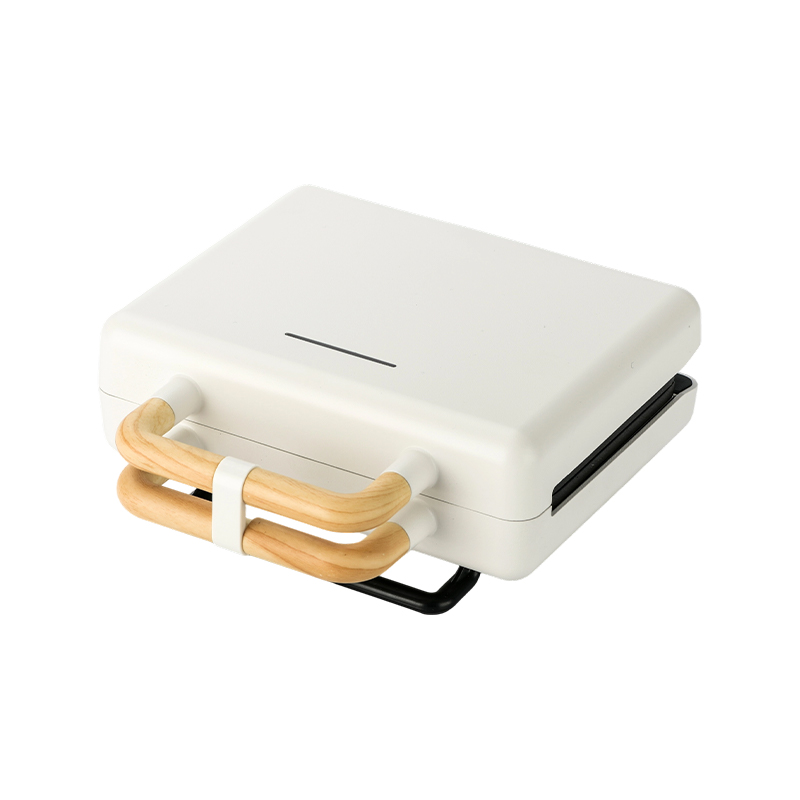
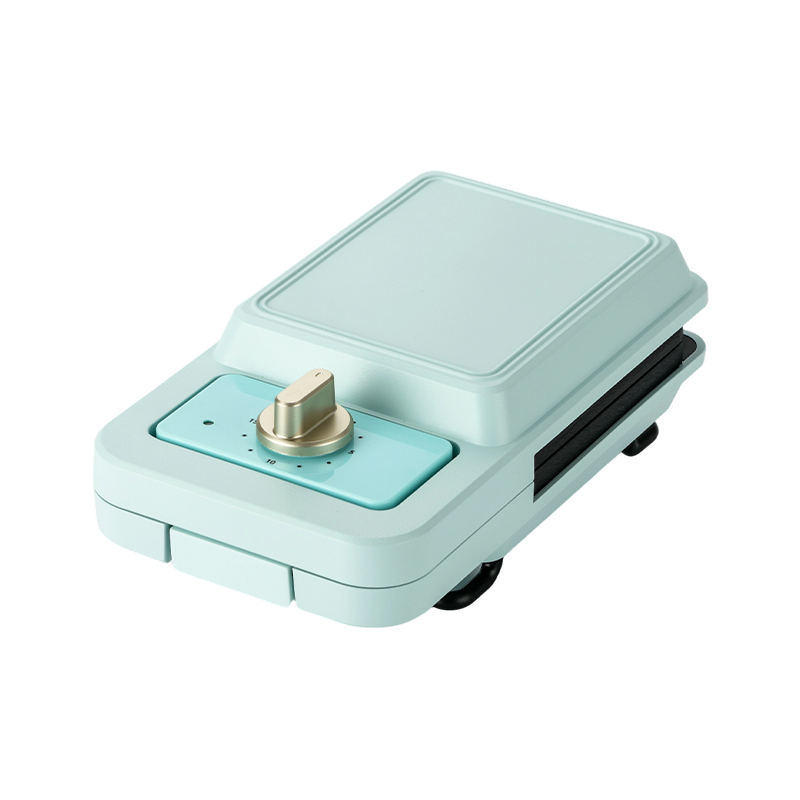
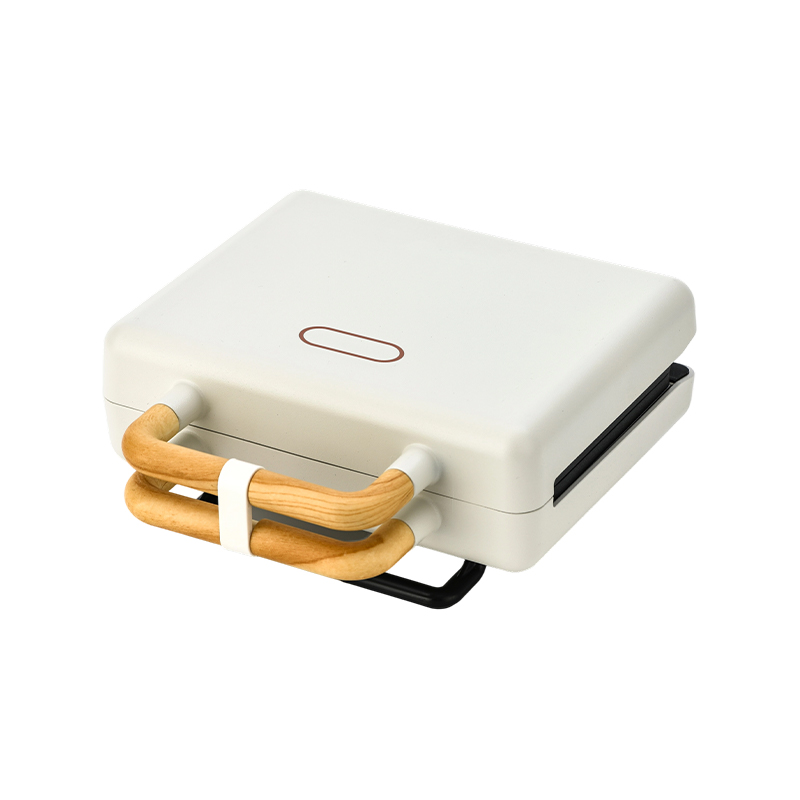
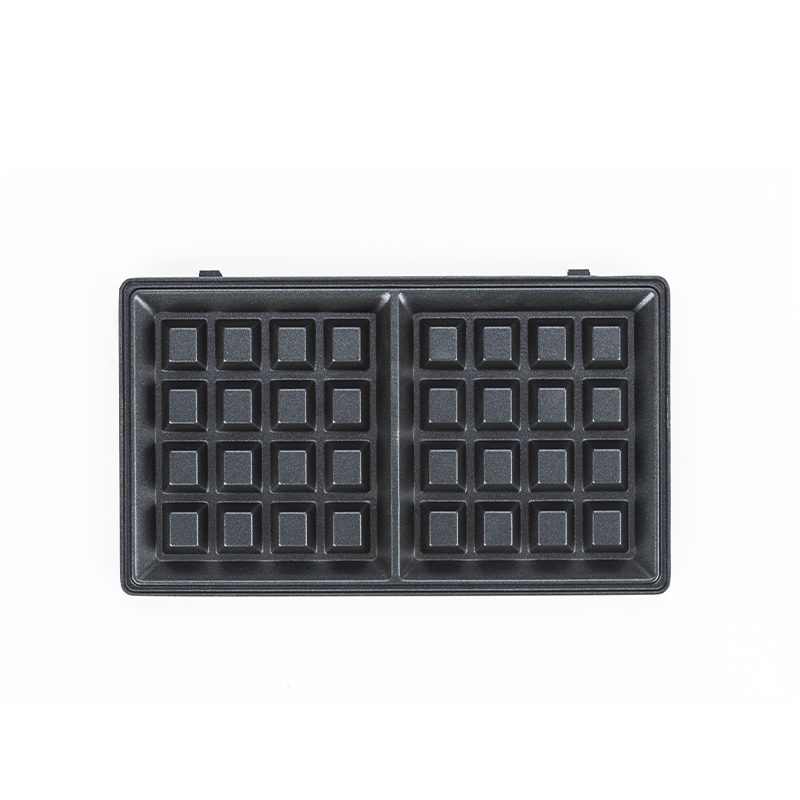 BJX-S025 2-Slice Detachable Sandwich and Grill MakerA 180° opening, tool-free removable plates and four interchangeable molds make this compact 800W press useful for sandwiches, waffles and griddle-style meals.View Product →
Specifications to Confirm Before You Approve a Sample
Four numbers decide whether a five-function unit feels premium or cheap: wattage, thermostat tolerance, hinge cycle life and plate thickness. The rest is packaging and print quality.
| Specification | Target value | How to verify |
|---|---|---|
| Wattage | 750–900 W for two-slice; 1,300–1,500 W for four-slice and flat griddle work | Power meter at rated voltage; heat-up to 180 °C within 3–4 minutes |
| Thermostat tolerance | ±10 °C at plate centre; no more than 15 °C spread corner to centre | Thermocouple at three points after a 10-minute soak |
| Hinge life | 5,000 open and close cycles to 180° without lateral play | Bench rig; inspect for play and wobble every 1,000 cycles |
| Plate coating | Cross-hatch adhesion pass; no flaking after 50 dishwasher cycles | Tape test plus cyclic washing on production samples |
| Timer accuracy | ±1 minute over a 15-minute cycle | Stopwatch across five consecutive runs |
| Cord and plug | 0.75–1.0 m cord, destination-market plug, strain relief at 30 N | Pull test plus visual check on the bushing |
| Food-contact compliance | LFGB or FDA depending on market; CE/LVD/EMC for the EU | Certificate of conformity plus a lab report on the actual coating used |
Control type matters more than most spec sheets admit. A three-level rocker switch is cheap and predictable, while a dial gives the illusion of precision unless the thermostat holds its tolerance across the whole range. Where the retail price allows, a mechanical timer removes the most common complaint of all: bread that is either pale or carbonised because the user had to guess.
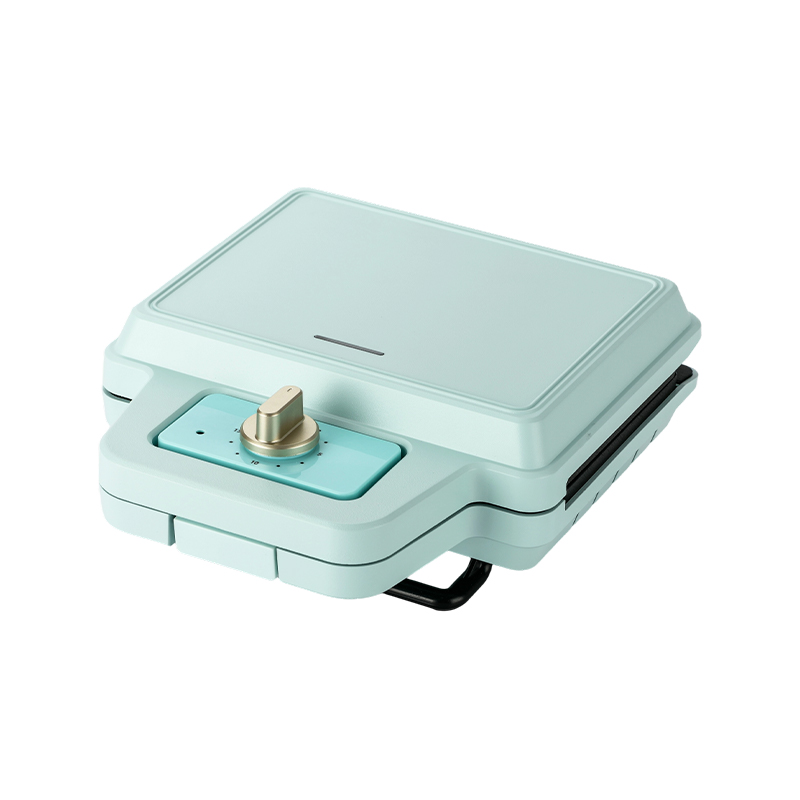
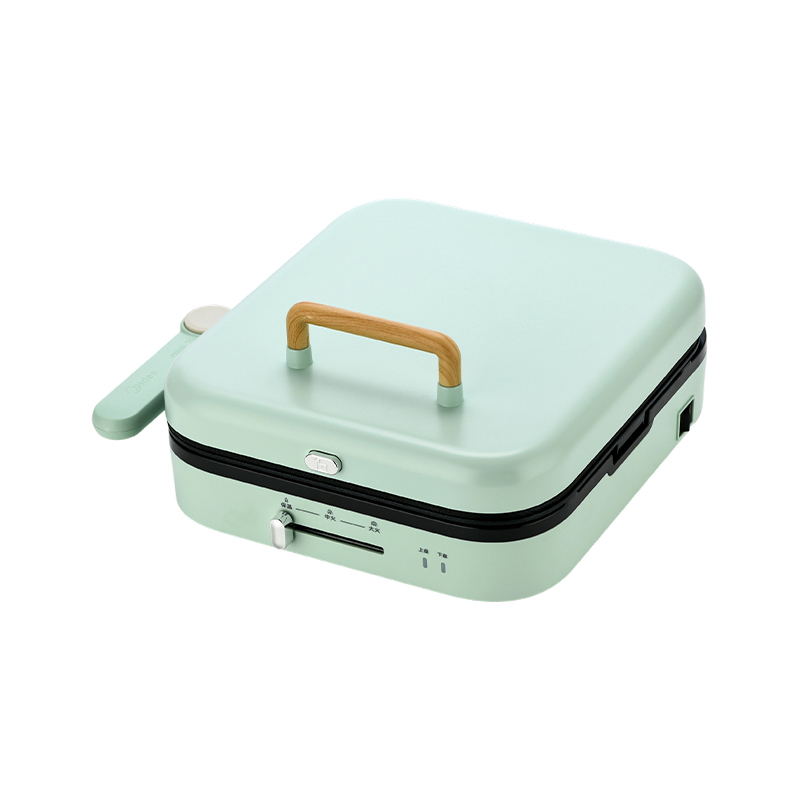
 BJX-S026 4-Slice 180° Open Grill and Sandwich MakerWith four detachable plates, a three-level 800W/1600W switch and removable drip tray, this 180°-opening grill suits family sandwiches, waffles and tabletop grilling.View Product →
Where Five-in-One Designs Fail in the Field
Field failures cluster around heat, fat and the hinge rather than electronics, which is why they are usually visible during a two-day sample run.
- Coating breakdown along the rib crests, where scraping happens first and re-coating is impossible.
- Grease reaching the hinge pin, drying hard, and adding enough friction to bend the lid arm over months of use.
- Cold zones at the rear of a flat plate, so the back half of a pancake browns while the front is still pale.
- Latch looseness after repeated heat cycles, which stops the press from applying even contact.
- Fat channels that hold less than the recipe produces, so overflow reaches the counter and the customer blames the appliance.
- Weight distribution — a heavy lid plus a light base tips forward when the unit is open at 180°, which reads as poor build quality even when nothing is broken.
None of these need new technology to fix. They need the sample to be cooked on, not just photographed.
Costing, MOQ and Tooling Realities
Plate tooling, not the appliance itself, sets the entry ticket for a new five-function model. A single sandwich plate mold is affordable; a second waffle mold plus a flat griddle mold can turn a modest project into a five-figure commitment before the first container ships.
- Each additional plate shape needs its own mold, so agree early on which functions are core and which are optional accessories.
- Colour changes multiply MOQ; a two-colour programme at 1,000–3,000 pieces per colour is a common starting point for a small kitchen appliance line.
- Plate sets add weight and cube — a three-set unit can lose a container slot compared with a single-set version, which quietly erodes the margin on cheaper freight.
- Spare plate kits sold as accessories improve after-sales revenue and reduce whole-unit returns for coating damage.
- Certification is per configuration in practice: a different plug, cord length or heater changes the file, so budget for re-testing rather than assuming a family approval.
Run the landed-cost comparison with the plate count fixed, and the cheapest unit on the quote sheet rarely stays the cheapest per unit of shelf space.
Factory QC Checklist
Six checks catch most of what goes wrong on a five-function line, and all of them can run on a sample of twenty pieces.
- Verify the safety cut-out trips before the plate exceeds its rated temperature on an empty cycle.
- Measure thermostat accuracy at three positions on each plate set, not just the centre of the ribbed plate.
- Cycle the hinge to 180° two hundred times, then check for lateral play and lid alignment.
- Cook the same sandwich on three units and compare browning, since consistency is what the end customer notices.
- Run the dishwasher cycle on the removable plates and re-check coating adhesion at the edges.
- Pull-test every cord and inspect strain relief, because that is the failure most likely to become a safety report.
A fifteen-minute timer also earns its cost here: it lets the operator repeat the same cycle, which makes the browning comparison meaningful instead of anecdotal.
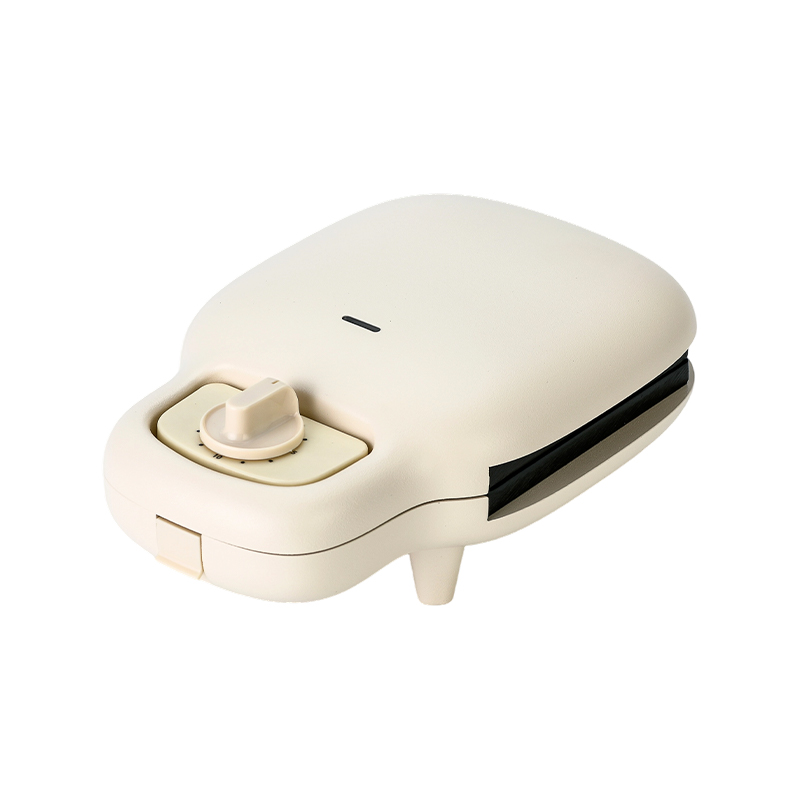
 BJX-S016 15-minute timer 2-Slice multi-function sandwich waffle makerCategory: SpecificationView Product →
Frequently Asked Questions
Do I need all five functions for a mainstream retail channel?
No — three sell and two support. Panini press, griddle and waffle drive the purchase decision, while the bake and warm settings mainly justify the higher price tier and the "5 in 1" claim on the box.
Are removable plates worth the extra cost?
Yes for any market where reviews matter. The cleaning difference between fixed and removable plates is enough to change star ratings, and the $3–$6 in parts is usually recovered in a higher retail price and fewer returns.
What wattage should I specify for a 220–240 V market?
750–900 W for a two-slice unit and 1,300–1,500 W for a four-slice or open griddle design. Under-powering a large plate is the fastest route to pale bread and long preheat times.
How long should a sample evaluation take?
Two working days of cooking plus one cycle test is enough to expose coating, hinge and thermostat issues. Anything shorter is a photo shoot, not an evaluation.
The short version for buyers: decide the plate architecture first, then the control type, then the tooling budget — the function count follows from those three choices, not the other way round. You can compare the configurations side by side in the full home sandwich maker range and match plate style, hinge and timer to the price tier you actually intend to sell.