

 English
 中文简体
 Español
 Deutsch

An aluminium sandwich maker is a countertop cooking appliance whose heating plates are cast or stamped from aluminium rather than steel — and those plates, not the housing colour or the packaging, decide whether a sandwich browns evenly or burns on one side.
Here is the short answer for buyers: lock down four things before you discuss appearance — plate material and thickness, the coating system, the wattage and thermostat, and the compliance paperwork. Get those right and a modest design will still perform in the field; get them wrong and even a good-looking unit comes back as returns.
- Plate construction: die-cast or stamped aluminium, and how thick
- Coating: PTFE, ceramic-reinforced, or uncoated (rare for food contact)
- Control: fixed thermostat, adjustable dial, or a mechanical timer
- Documents: food-contact migration report, LFGB or FDA statement, CE/EMC file
What "Aluminium" Actually Covers in a Sandwich Maker Specification
In a bill of materials, "aluminium" nearly always refers to the plates alone. The body is a thermoplastic — PP for lower-cost models, ABS or a reinforced blend where the hinge area runs hot — while the heating element is a tubular or mica element clamped against the back of each plate.
Aluminium is chosen for one property: thermal conductivity. Commercially pure aluminium conducts heat at roughly 200 W/m·K, against about 16 W/m·K for stainless steel. That gap is why an aluminium plate recovers temperature within seconds after cold bread, cheese or a frozen filling lands on it — precisely the moment a sandwich either seals or dries out.
Two constructions dominate the volume market:
- Die-cast aluminium: molten alloy poured into a steel mould, producing a rigid plate of 2.5–4 mm with integral ribs and screw bosses. Even heat spread, stable flatness, higher tooling cost.
- Stamped aluminium: sheet of 1.2–2.0 mm pressed into shape. Cheaper tooling and lower weight, but thinner sections develop hot spots and can bow after repeated high-wattage cycles.
Die-Cast vs Stamped vs Steel: What the Difference Feels Like in Use
Die-cast aluminium wins on warm-up and recovery; stamped steel wins on abuse tolerance and on perceived weight. For a retail buyer, that trade-off usually shows up as price versus repeat purchase.
| Property | Die-cast aluminium plates | Stamped aluminium or steel plates |
|---|---|---|
| Typical plate thickness | 2.5–4.0 mm | 1.2–2.0 mm (aluminium), 0.5–0.8 mm (steel) |
| Thermal conductivity | About 200 W/m·K | About 200 W/m·K (thin aluminium), about 16 W/m·K (steel) |
| Warm-up to cooking temperature | 2–3 minutes | 2–4 minutes aluminium, 4–6 minutes steel |
| Recovery after loading | Fast | Moderate to slow |
| Risk of warping or hot spots | Low | Moderate to high at high wattage |
| Relative tooling cost | High | Low to moderate |
Five Plate Specs Worth Writing Into the RFQ
Most quality complaints in this category trace back to a spec that was never written down, so state these five items numerically in the request for quotation.
- Plate thickness and mass. Ask for 2.5 mm minimum on die-cast plates; below that, heat spreads unevenly toward the edges.
- Coating system. A two-coat PTFE build of roughly 20–35 µm, cured above 400 °C, is the mainstream standard. Ceramic-reinforced coatings resist metal utensils better but cost more and are less forgiving on surface preparation.
- Flatness and closed-plate gap. The pair should close to a parallel gap within about ±0.3 mm across the cavity; more than that and thick fillings leak batter or cheese onto the element.
- Hinge and latch life. Specify a cycle count — 5,000 open/close cycles is a reasonable household target — and ask which hinge parts are metal rather than moulded plastic.
- Thermostat and thermal fuse. A bimetallic or capillary thermostat plus a one-shot thermal fuse is a basic safety expectation; adjustable dials should carry a marked temperature range, not just minimum and maximum.
Power, Timers and 180° Hinges: Matching the Build to the Market
Wattage should follow plate size, not marketing copy. A single-slice machine normally sits at 350–700 W, a two-slice unit at 700–900 W, and a 180° panini-style grill at 1,200–2,000 W. Under-powering a large plate is the most common cost-down mistake: the thermostat never reaches set point and the sandwich steams instead of toasting.
A mechanical 15-minute timer is the cheapest usability upgrade available, because it removes the "walk away and burn it" failure that drives one-star reviews. A 180° hinge does the opposite job — it turns a single-purpose toaster into a flat grill for eggs, panini and vegetables, widening shelf appeal without touching the electronics.
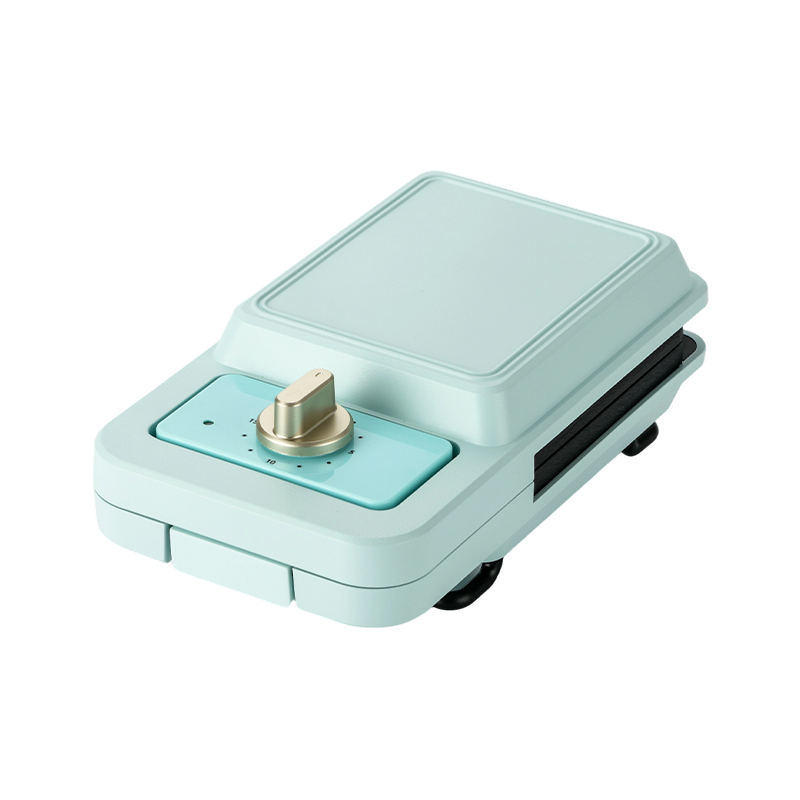
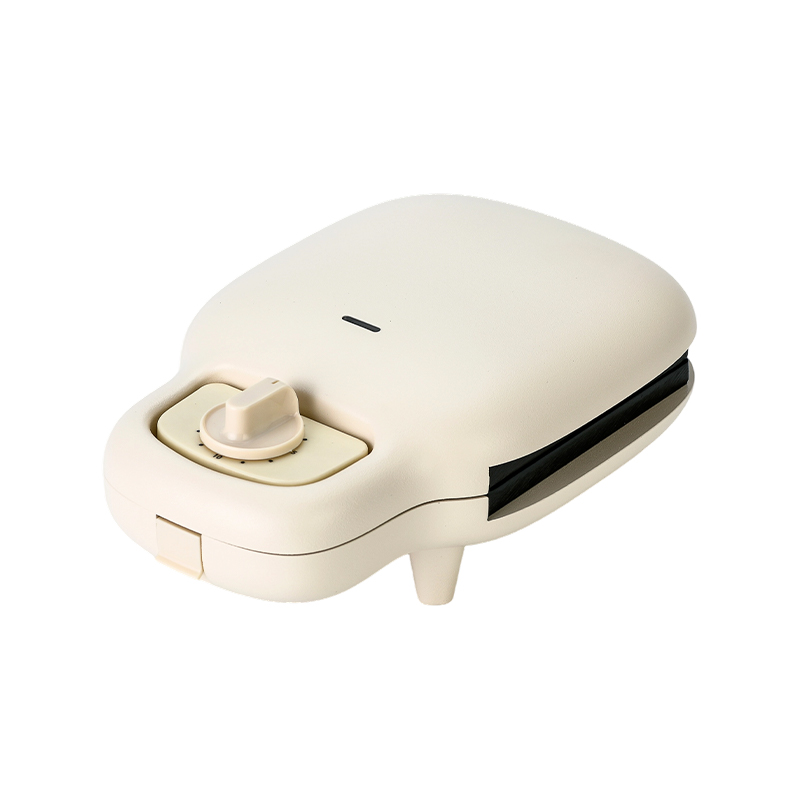
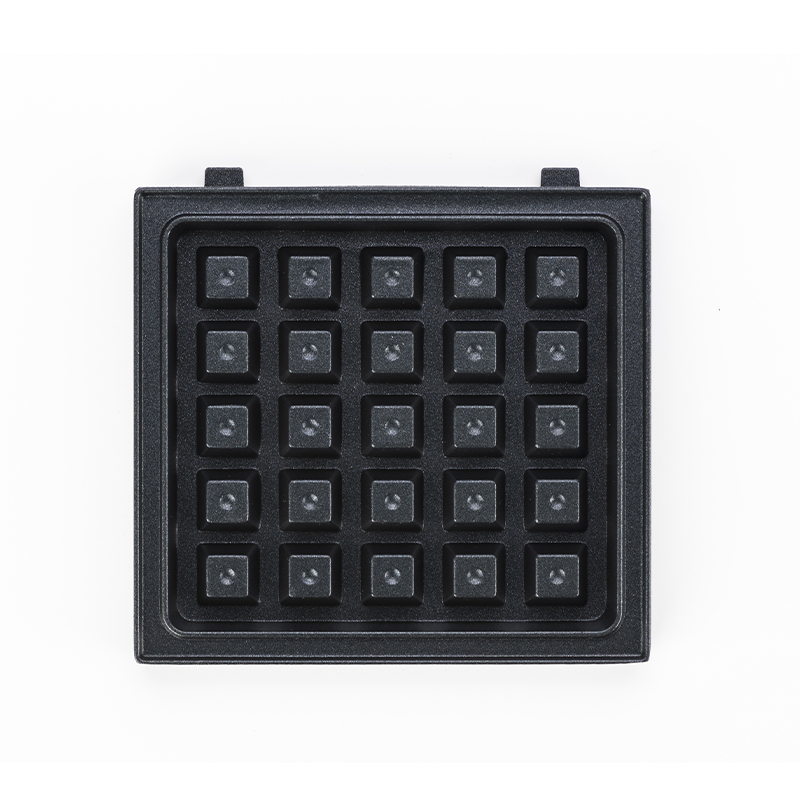 BJX-S006 Single-Slice Detachable Sandwich and Waffle MakerCompact 600W maker with detachable non-stick plates and a 15-minute timer, useful for apartments and quick breakfasts; easy cleaning and even cooking.View Product →
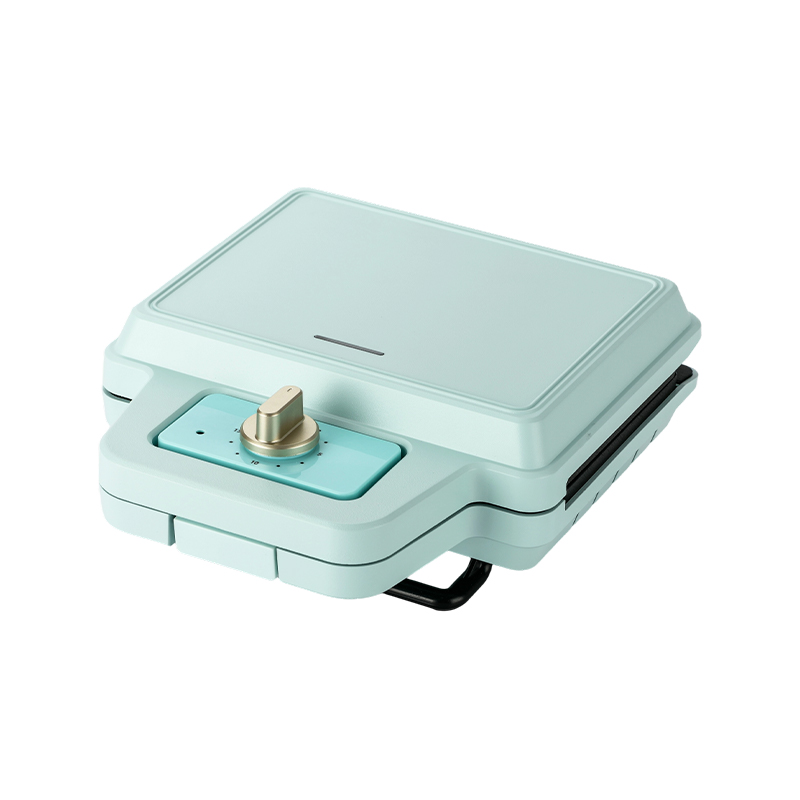
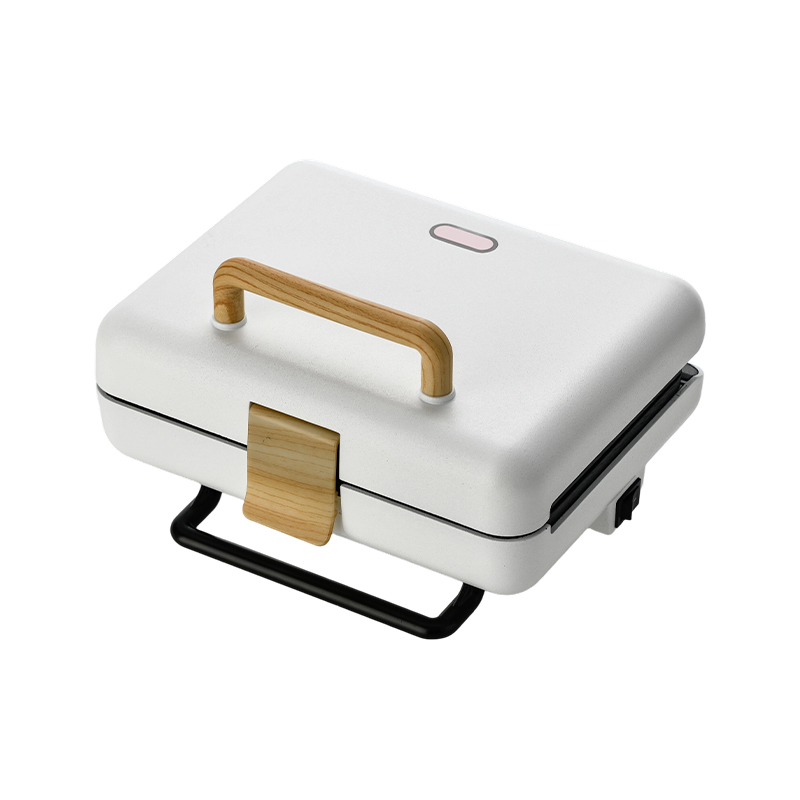
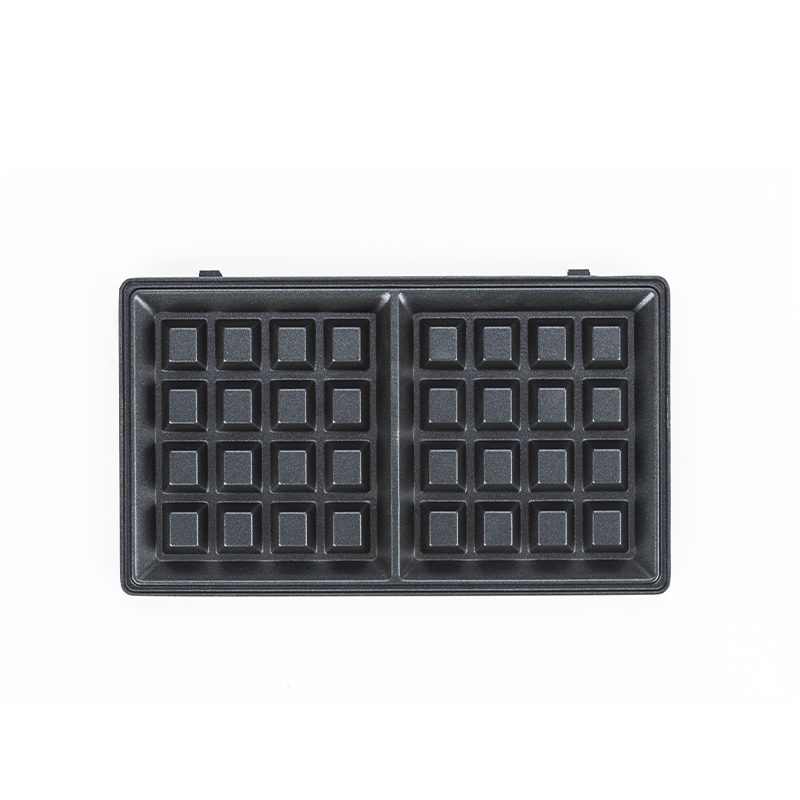 BJX-S025 2-Slice 180° Open Sandwich and Grill MakerInterchangeable non-stick plates and a 180° flat-grill mode let this 800W maker handle sandwiches, waffles and grilled vegetables for versatile home cooking.View Product →
Removable plates deserve separate attention, because they change how the appliance is used rather than how it cooks. A latch and a pair of contacts add cost, but they turn a wipe-clean machine into a washable one — one of the few features shoppers actually notice at the shelf.
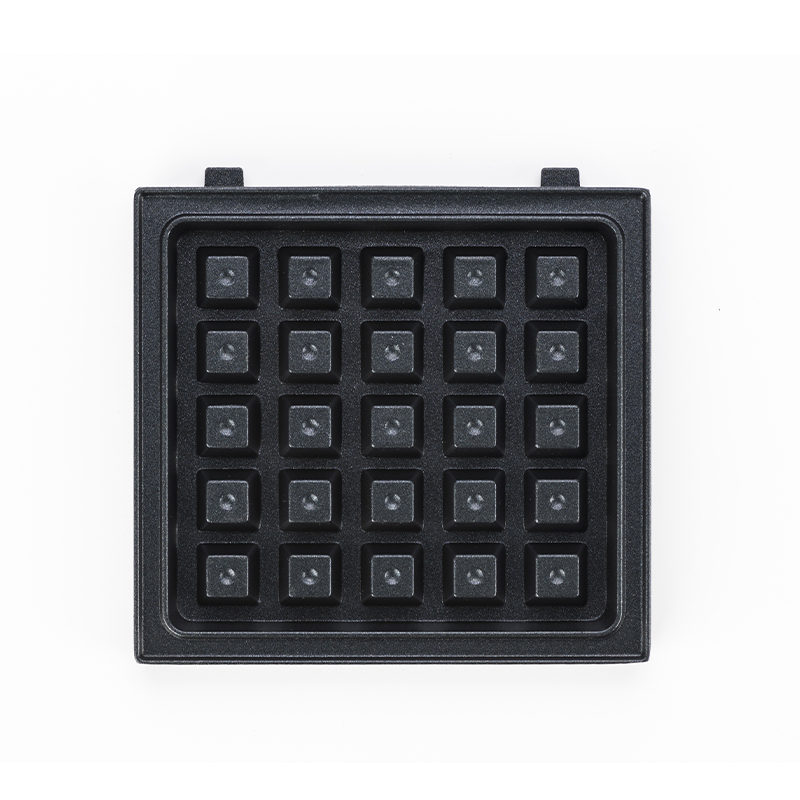 BJX-S005 Multifunctional Sandwich Maker with Six Detachable PlatesA compact 600W sandwich and waffle maker with six detachable non-stick plates, suited to small kitchens and varied breakfasts, desserts or grilled snacks.View Product →
If you want to compare formats side by side, the home sandwich maker range covers single-slice, two-slice and 180° grill builds in one place.
Compliance Paperwork to Request Before Sampling Ends
The document set carries as much weight as the machine, because aluminium plates and their coatings are food-contact materials and most importers will ask for a migration report plus a declaration of compliance.
| Market | Documents usually requested |
|---|---|
| European Union | Declaration under Regulation (EC) 1935/2004, GMP statement to 2023/2006, coating migration test report, CE file for LVD and EMC, REACH SVHC statement, PAH test on handles and grips |
| United Kingdom | UKCA file plus an equivalent food-contact declaration |
| United States | FDA 21 CFR 175.300 statement for the coating, UL or ETL listing for the cord set |
| General | ISO 17025 laboratory report, RoHS statement, batch traceability, carton drop-test report |
Sourcing Risks Worth Testing on the First Batch
Three failure modes account for most field complaints — coating flaking, hinge wobble and uneven browning — and all three can be screened in a single day with basic equipment.
- Coating adhesion: cross-hatch test on a plate that has been cooked on; lifting at the cut edges signals an under-cured or over-thin coating.
- Corrosion: 24-hour neutral salt spray on hinges, screws and cut aluminium edges; white oxidation points to poor sealing after trimming.
- Thermal behaviour: run the machine empty at maximum for 30 minutes and log surface temperature at four corners; a spread above 15 °C indicates an uneven element or a thin plate.
- Handling: 500 open/close cycles on the latch, plus a pull test on the cool-touch handle.
- Transit: drop the export carton from 80 cm onto one corner and one edge, then inspect the plates for distortion.
Why the Factory Behind the Machine Matters
Process depth decides how much of the design you can actually change. A plant with its own mould shop, injection moulding and assembly lines can cut a new plate profile or housing colour without a third party in the middle, which usually shows up as shorter sampling rounds and fewer tolerance arguments between vendors.
When you shortlist a sandwich maker manufacturer, ask which steps stay in-house — mould making, die-casting, injection, coating, assembly and packing — and which are subcontracted. Coating is the step most often outsourced, and it is also where adhesion failures begin, so it is worth knowing who owns that process. Positioning the appliance as a daily-use kitchen tool rather than a novelty also helps distributors write listing copy; our note on how a sandwich maker became a kitchen efficiency tool covers that angle.
FAQ
Is die-cast aluminium worth the extra cost over stamped plates?
For a two-slice household unit, usually yes — the plate is the heating surface, and die-cast holds both flatness and heat. On a very aggressive promotional line, stamped plates paired with a good thermostat can still be acceptable.
How many watts does a two-slice aluminium sandwich maker need?
700–900 W is the practical range. Below 600 W, recovery after loading is slow and the bread dries before it browns; well above 1,000 W without a proper thermostat, you gain speed and lose control.
Should the plates be removable?
Only if cleaning is a priority for your market. Removable plates add a mould, a latch and electrical contacts, but they convert a wipe-clean appliance into a washable one, which is a visible shelf benefit.
Which coating should I specify, PTFE or ceramic?
PTFE is the safer default: predictable release, lower cost and a well-documented food-contact file. Ceramic-reinforced coatings resist scratching better but demand tighter control during spraying and curing.
None of these decisions is exotic on its own; the difficulty is that they interact. A thicker plate needs more wattage, a hotter element needs a better thermostat, and a durable coating needs a cleaner pre-treatment line. Buyers who treat the aluminium sandwich maker as one system — plate, coating, control and paperwork — get a product that survives the first season. Buyers who chase the lowest quotation on the plate alone usually pay the difference in returns.