

 English
 中文简体
 Español
 Deutsch

A buyer in Rotterdam sends back a pallet because customers cannot scrape melted cheese out of fixed plates. A home cook in Manchester stops using her grill after six weeks for exactly the same reason. Both failures come down to one specification decision, and both disappear the moment the cooking plates lift out of the housing. That is the short answer: with a sandwich maker that has removable plates, cleaning drops from a five-minute scraping job to a thirty-second wipe, the non-stick coating survives much longer because you soak the plate rather than the appliance, and on interchangeable models one machine covers toasted sandwiches, waffles and open grills.
What follows is what the specification really covers, how the three plate systems compare on cost and durability, and which details to check before committing to a container load.
What Counts as a Sandwich Maker With Removable Plates
A sandwich maker with removable plates is an appliance whose upper and lower cooking plates detach from the heated housing, usually through a spring latch at the hinge end or a pair of slide rails, and reconnect through a plug-in thermal coupler.
The wording matters in purchasing documents, because three different systems are sold under similar descriptions.
Removable, interchangeable and fixed are not the same thing
- Removable plates: one fixed shape, normally sandwich or grill, that lifts out for washing. Same cooking surface, far better access.
- Interchangeable plates: two or more plate sets — sandwich, waffle, flat grill — swapped into the same housing, so the hinge and coupler must accept different thicknesses.
- Fixed plates: moulded or screwed into the housing. Cheapest to build, hardest to clean, and the coating is usually the first part to fail.
A machine can be both removable and interchangeable, and that combination is what most multi-function sandwich and waffle makers use.
Why Removable Plates Matter More Than Wattage
Cleaning decides how often an appliance is used; wattage only decides how quickly the first sandwich is ready.
- Hygiene: fat and melted cheese soak off a detached plate in warm water. In a fixed unit they bake onto the coating and into the hinge gap.
- Coating life: scrubbing inside a housing wears the non-stick layer near the edges, which is exactly where a sandwich presses hardest.
- Versatility: interchangeable plates turn one purchase into a sandwich press, a waffle iron and a small open grill, which matters where counter space is limited.
- Storage: plates stack flat in a drawer, so an interchangeable set takes less cupboard space than three separate appliances.
Practical kitchen guidance on using a sandwich maker as an everyday efficiency tool, including preheating and filling limits, is covered in this guide to the home sandwich maker as a kitchen efficiency tool.
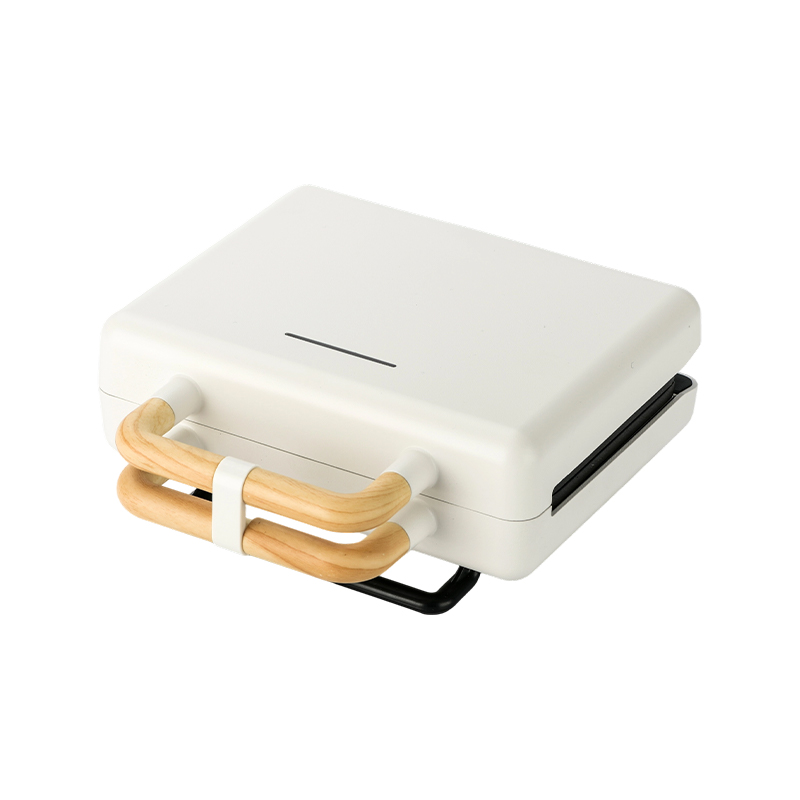
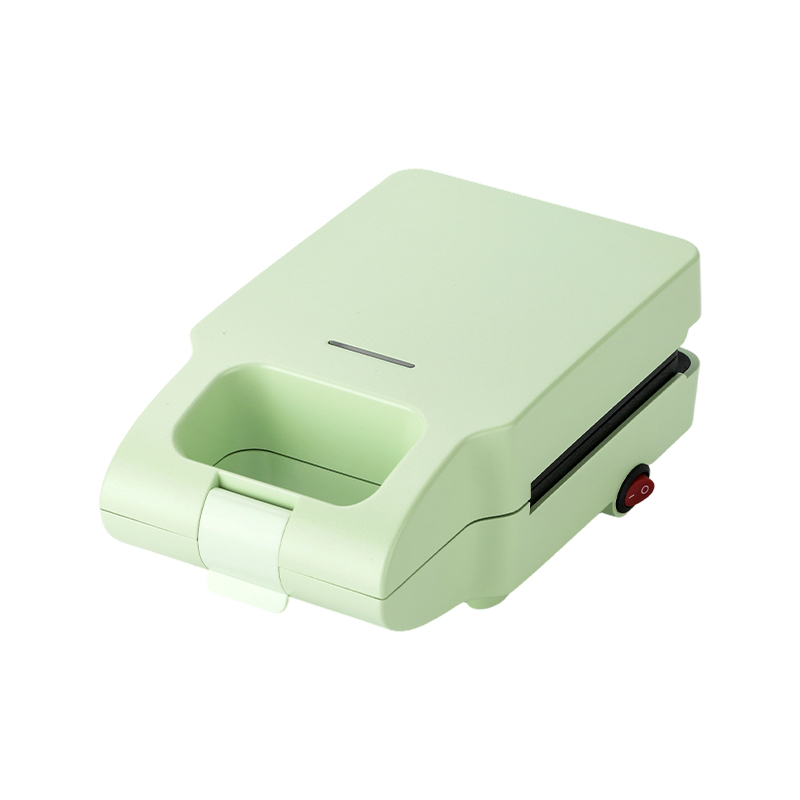
 BJX-S002 Compact Removable-Plate Sandwich and Waffle MakerA compact matt-painted multi-plate sandwich maker with detachable non-stick plates, thermostat control and stand-up storage, suited to apartments or small kitchens.View Product →
Removable vs Interchangeable vs Fixed Plates: A Practical Comparison
For most households the ranking is interchangeable first, removable second, fixed last — but the tooling and part cost gap is real, so the right system depends on the price point you are targeting.
| Plate system | Daily cleaning | Coating durability | Flexibility | Main risk | Typical retail position |
|---|---|---|---|---|---|
| Fixed | 3–5 minutes, no immersion | Moderate to low; scrubbed in place | Single function | Coating damage near the hinge | Entry level |
| Removable, single shape | 30–60 seconds; plate soaks in the sink | Good; the plate, not the housing, takes the wear | One function, best cleaning | Latch and coupler wear | Mainstream |
| Interchangeable, multi-set | 30–60 seconds per plate | Good if plates are stored flat, not stacked hot | Sandwich, waffle and grill | Lost plate sets; thickness tolerance | Mid to premium |
What to Inspect Before You Buy
The plate system is only as good as the four parts around it: the latch, the thermal coupler, the coating and the thermostat.
- Latch retention: seat the plate and twist gently. A well-designed clip locks with two fingers and stays locked without the appliance being closed.
- Coupler alignment: male pins should enter smoothly and without force. Misaligned couplers are the most common cause of "the machine stopped heating" complaints.
- Plate thickness and flatness: 2.5–3.0 mm aluminium is common; thinner plates warp and stop sitting flush, which shows up as uneven browning.
- Coating build: inspect the rolled edge, where the coating is thinnest and chips first.
- Thermostat placement: the sensor should sit against the plate, not in the housing cavity, or the ready light will misreport the plate temperature.
- Replacement parts: ask whether spare plate sets can be ordered separately, and at what minimum quantity.
Units that open a full 180 degrees also need a hinge that tolerates the flat position without stressing the coupler, since the plate carries the load when the appliance is used as an open grill.
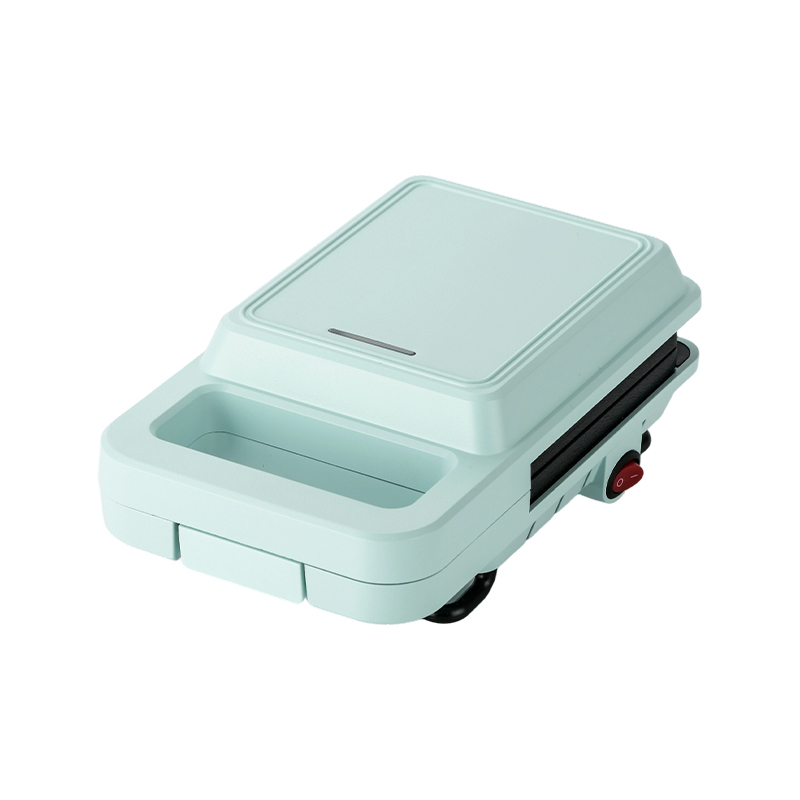
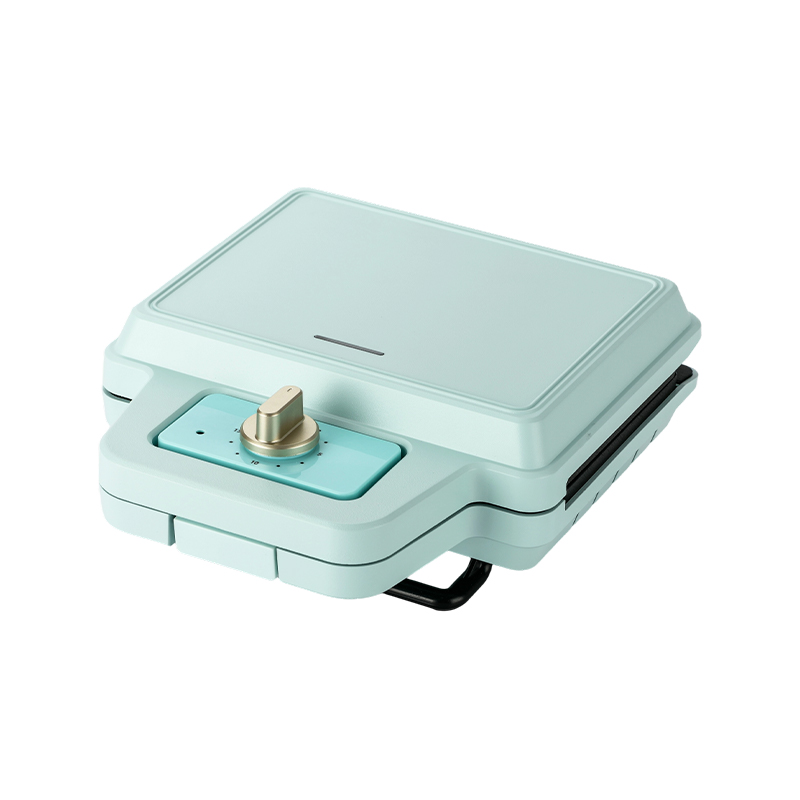
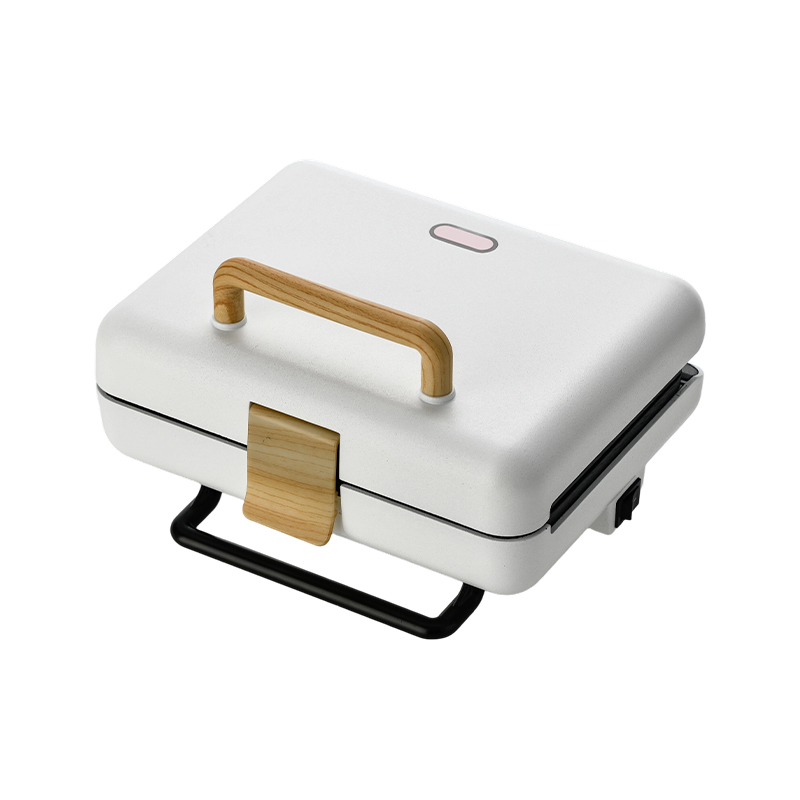
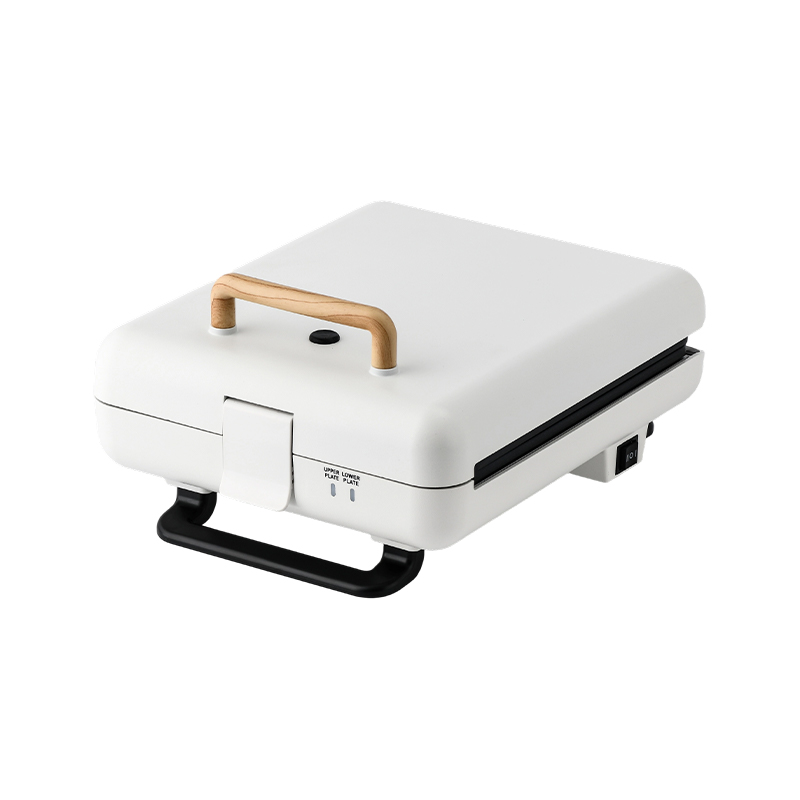
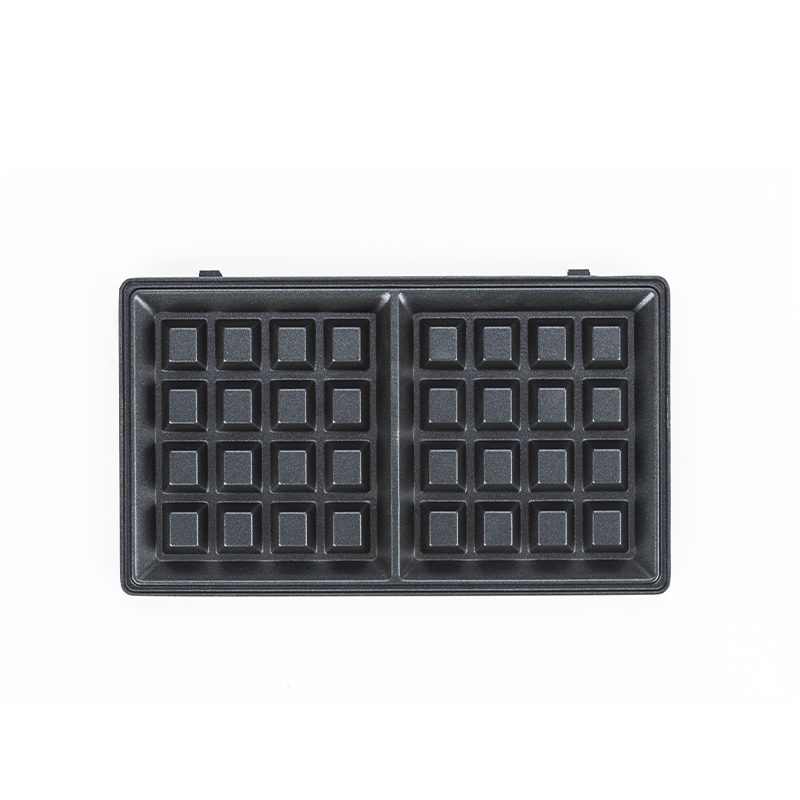 BJX-S025 2-Slice 180-Degree Open Sandwich and Grill MakerA two-slice detachable-plate sandwich maker and grill that opens flat to 180° for tabletop grilling, with interchangeable plates and dual heating.View Product →
Where Low-Cost Units Fail in the Field
Most returns are not caused by the removable-plate concept itself, but by how cheaply it was executed.
- Plate wobble after a few weeks: usually a single moulded tab that fatigues. A metal spring clip or a twin tab lasts longer.
- Coating chipping on the rim: sharply stamped edges are often left unrolled, so the first dishwasher cycle lifts the coating.
- Overheating near the coupler: if the thermostat reads housing temperature instead of plate temperature, the surface runs hotter than intended and the coating darkens early.
- Melted plastic on the hinge cover: a symptom of the plate not seating, so heat escapes sideways instead of into the sandwich.
- Spare plates that never arrive: planning for replacement sets protects a brand more than a lower unit price does.
Matching the Model to the Market
Once the plate system is settled, the choice narrows to slice count, opening angle and control type.
- Single-slice units: compact and inexpensive, popular in apartments and student housing, and easy to clean because the plate is small.
- Two-slice units: aimed at family kitchens; heavier plates need a stronger hinge and a deeper seat.
- 180-degree opening: lets the appliance work as an open grill or double hotplate, which raises perceived value noticeably.
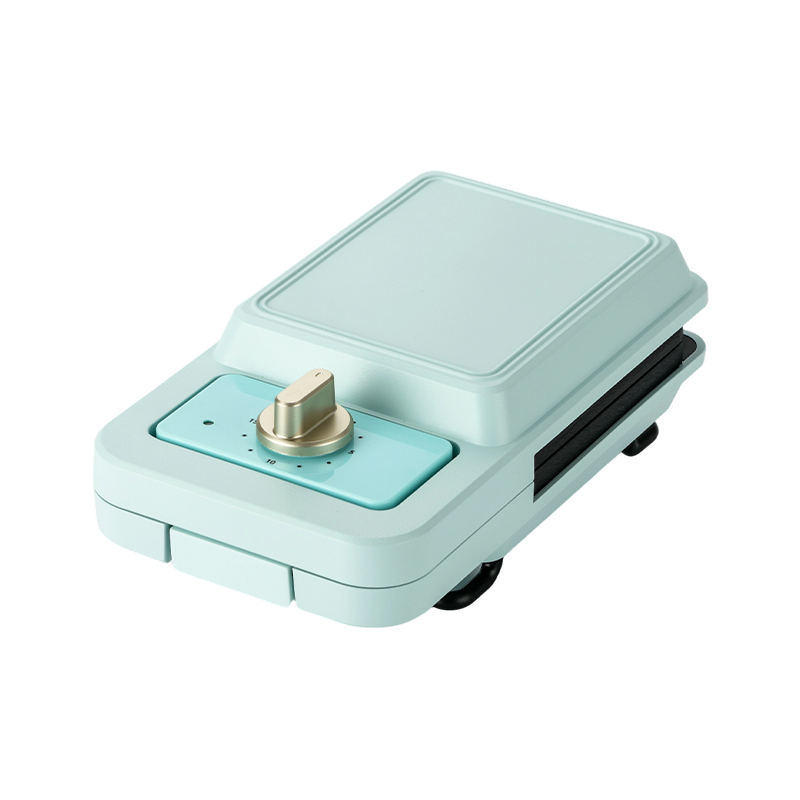
- Mechanical timer: removes the "walk away and burn it" problem; 15-minute timers are common on removable-plate sandwich makers.
- Adjustable control versus fixed thermostat: grill-type plates benefit from a temperature dial, while simple sandwich plates rarely need one.
Retro handles, wood-grain finishes and coloured housings are cosmetic, but in competitive markets they are often what closes the sale; the plate system is what earns the repeat order. The full range of plate-equipped sandwich and grill models can be seen in the home sandwich maker catalogue.
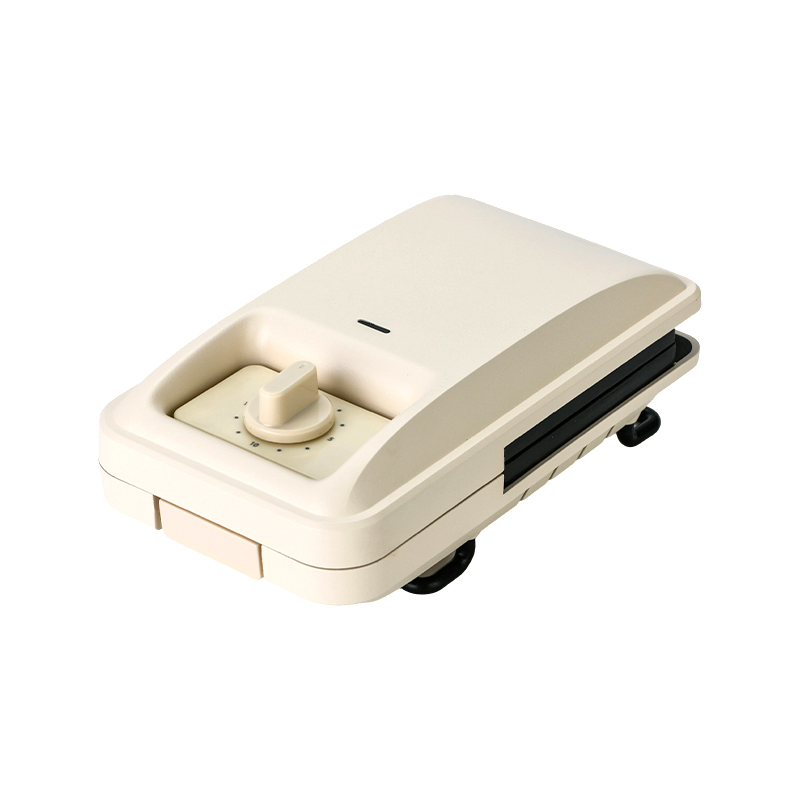
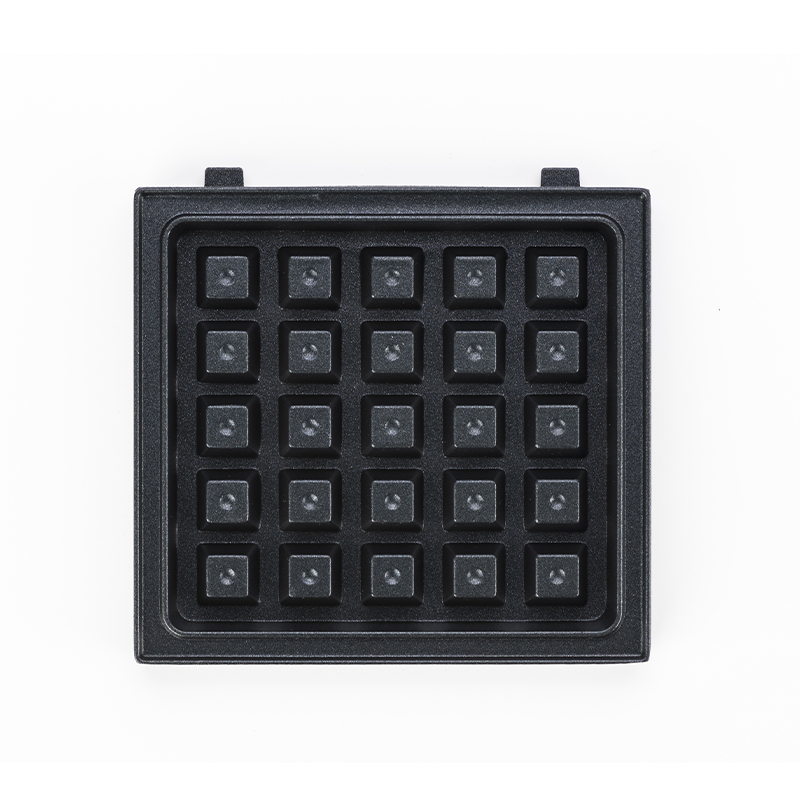 BJX-S006 15-Minute Timer Removable-Plate Sandwich and Waffle MakerA compact timer-controlled sandwich maker with detachable non-stick plates for waffles, donuts and snacks, designed for apartments, dorms or small kitchens.View Product →
FAQ
Are removable plates dishwasher safe?
Most are marketed as dishwasher safe, but hand washing in warm soapy water keeps the non-stick coating intact longer. If dishwasher use is a selling point for your market, confirm that the coating is rated for it and that the coupler pins are sealed against moisture.
Does a removable plate lose heat compared with a fixed one?
Not when it seats properly. A loose plate creates an air gap between plate and heater, and that gap shows up as slower browning and pale edges. Designers normally target close contact across the whole surface, so the latch and the seat flatness matter as much as the element rating.
Can replacement plates be bought separately?
It depends on the supplier. Ask for the spare-plate minimum order quantity before committing; a machine whose plates cannot be replaced has a shorter useful life, and that shortens the brand's repeat-purchase cycle too.
Do removable plates make a sandwich maker less durable?
Not inherently. The failure point is the latch and the coupler rather than the plate itself. Metal clips or twin tabs, plus couplers with a locating key, keep the plate secure through thousands of cleaning cycles.
Removable plates are a small mechanical decision with a large effect on cleaning habits, coating life and how many appliances a customer needs. Judge the plate system first, then the latch, coupler and thermostat around it — the rest of the specification is easier to trade away.